CranioSacral Therapy for Relaxation

Relaxation is one of those words that’s had a bad rap for too long and I would like to reclaim it right here, right now!

From a physiological perspective, relaxation is the iliciting of the parasympathetic nervous system, part of the autonomic nervous system, required for the body to perform such tasks as digesting food, getting quality sleep, maintaining a resting heart rate, stable blood pressure and respiratory rate, etc., and for those who experience chronic pain, for example, relaxation needs to be considered.

It’s essential for your body to do those tasks so it really ticked me off from my early years as a therapist that relaxation of the body was being sold only as some kind of fluff that was marketed as pampering (my personal favourite) or spa day for the girls. Don’t get me wrong, that can be fun and all, and can contribute to relaxation, but this has led to be the primary way the public perceives this, and it’s been challenging to introduce a different way of looking at it.

That being said, I will simply state that relaxation is a necessity to maintain health–body, mind, and spirit.

So, traditionally in the world of massage therapy, once again, perception of relaxation massage for health is only thought of with sheets and lotion. Why do we hold on so hard to the definition of something as a monolith instead of it being multifaceted? Living with such compartmentalized ideas is incredibly limiting and constrictive. Why would you want to limit yourself so much when there are other choices out there? Wouldn’t you want to be exposed to something different, refreshing, new that could awaken different sensations and outcomes for you? I’m sure you’re not doing this on purpose, but you could, on purpose, choose differently to experience relaxation in a unique way.

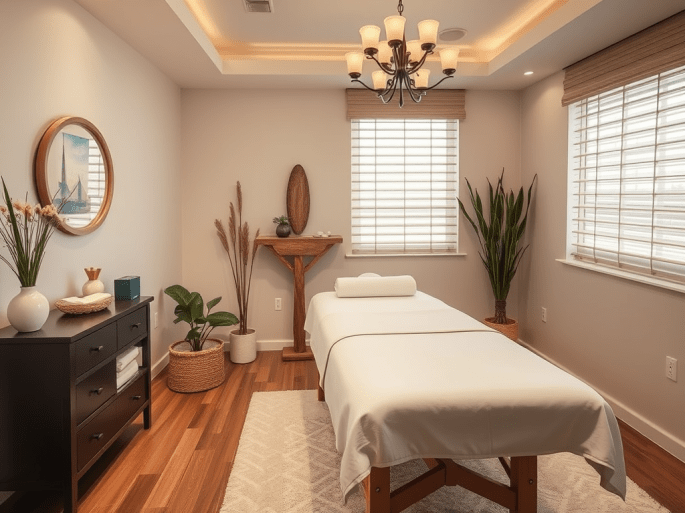
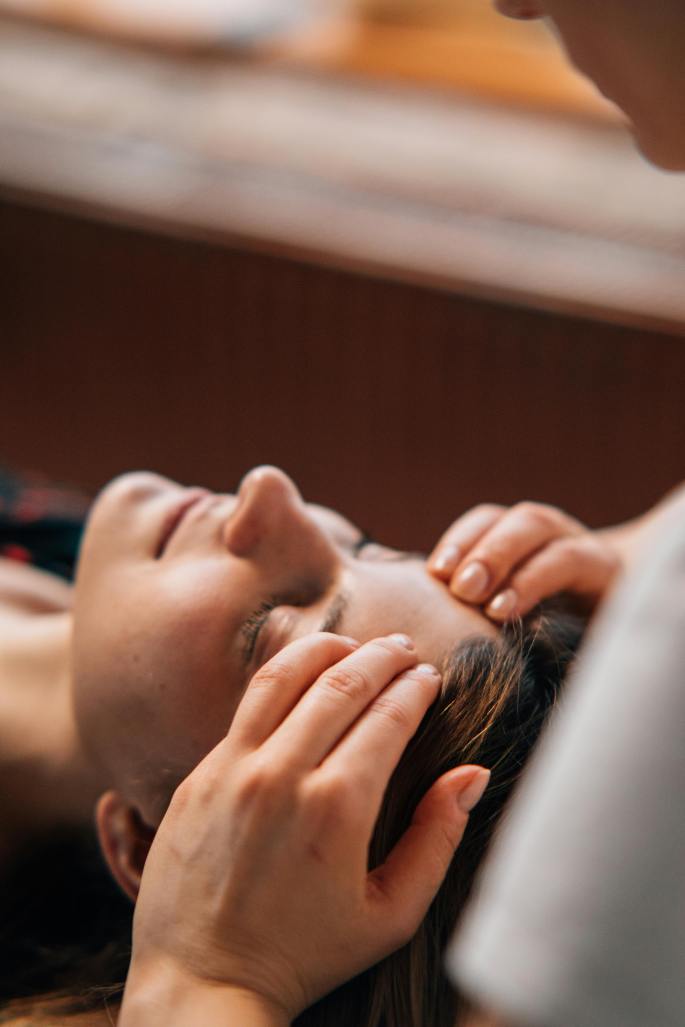
This is when CranioSacral Therapy for relaxation enters the room. It’s gentle, yet deep. You don’t have to remove your clothes and lie under sheets and have lotion or oil slathered all over your skin, especially if you have sensitive skin, allergies, or you really don’t like it. Instead, we can get straight to the treatment rather than me leaving the room, waiting for you to disrobe, then accidentally get under two sheets instead of just one (that hasn’t happened to me in a long time, but for a while there…lol!). It’s so much simpler. It can elicit different sensations. It can provide relief in a unique way.

So if you already know that there’s more to relaxation during massage therapy than what narrow public perception holds or if you’re willing to try something different because you may be missing out on something that could be useful to you, either way, if I’ve piqued your curiosity, reach out by hitting the button below. I can’t wait to work with you!
Let Me Introduce Myself

Hi, I’m Laura!

You already know a bit about me from checking out my website, but I figured I would expand a bit more to let you get a better sense of who I am and how I work.

My career has spanned a few decades and I’ve watched this profession change throughout the years. While I maintain that it’s important to come from an evidence-informed place to deliver trustworthy care, I have always maintained viewing you as a whole person–Body, Mind, and Spirit, and use my instincts to help heal you.

There is a term in health care called The Biopsychosocial Model (of health, pain, etc) which directs health care providers to consider a patient in a holistic way, that is, the Physical, the Mental, and the Social aspects of their life that contribute to chronic pain.

Years ago before this model was developed, I’d had some patients mention that their physician stated that 12 weeks after an injury, it should be resolved. So why was it in some cases not yet healed? I didn’t have a definitive answer for them, except that if the pain was still there, it clearly wasn’t resolved on some level and that there may be more to the issue than just the physical. Now, with an evidence-based framework, your health care providers should know that an unhappy family life or that you hate your job can be the cause, or at the very least, contribute to your pain.

So as your therapist, I will take into account that your chronic pain may be because of personal or professional difficulties and that we can focus on increasing relaxation on purpose so you aren’t in a stressed state the entire time you’re on the table.

My intention in becoming a massage therapist had been firmly grounded in wanting to heal people, particularly inspired by a family member who struggled with chronic pain. Before starting the massage therapy programme in Toronto, I took my level I Reiki so I could connect with patients on an energetic level because that’s where diease/dysfunction often starts and could be one of the missing pieces of their healing. Regardless, the combination of logic and instinct have yielded positive results.

If this makes sense to you, contact me so we can begin our work together. I can’t wait to meet you!

Massage Therapy is Not Just One Concept

Over twenty-five years ago, I joined a profession that has been misunderstood for quite some time.  First, massage therapy, even though the word “therapy” was in the title, was associated with massage parlours and we RMT’s had to be diligent in promoting the profession appropriately. 
 
However, the next iteration became associated with spas. There’s nothing wrong with consuming esthetic sessions that spas offer, but it did play a part in the overall misconception that booking a Massage Therapy treatment was all about pampering oneself by disrobing, getting under sheets and having oil or lotion applied generally while Enya or whatever spa-like music is playing in the background.
 
Massage Therapy is not a monolith.  We provide many different treatments, to many populations, performed in many different ways, using a variety of techniques, in a myriad of settings, all within our Scope of Practice to achieve desired outcomes…and one of those concepts is having an entire treatment done fully clothed.
 
Potential clients have expressed their apprehension in booking treatments, from modesty around disrobing to not wanting messy oils or lotions slathered all over them. Having a treatment done fully clothed would remove the barriers around receiving Massage Therapy by addressing a population who has difficulty disrobing due to injuries or arthritic changes over time that reduce range of motion, particularly of shoulders, hands, fingers, knees and hips.

It’s also just easier in general: you get on the table and begin immediately without wasting precious treament time having to get undressed and changed back into clothes that could get stained by oil/lotion, nevermind if your treatment requires you to turn onto your back, stomach or sides.

Then we need to address the other beast: deep vs gentle. I’ve been in this profession for over 25 years, and I have only occasionally worked on patients who really want deep massage. I have educated them by telling them what they may really want is “specific” massage. There could be one small area, made up by small, but significant muscles that can cause pain and dysfunction in a joint. If I specifically focus on those areas, my patients will know that I am “getting in there”, but that I’m actually not pressing that hard. That’s merely one example of “not deep”.

Now we’ll tackled the issue of “gentle”. Gentle doesn’t mean not deep. With a modality like CranioSacral Therapy, I assist you to modulate your autonomic nervous system, by encouraging you go from an erractic sympathetic (fight or flight) to a calm parasympathetic (rest and digest). Because my hands blend and meld with your tissue, I am not illiciting a reflex response that will cause you to flinch or tighten up, which allows for deeper work to be done, with the potential of more profound results.

If this speaks to you, click the button below to book your appointment today. I can’t wait to work with you!